| If you have trouble viewing this email, click here to view it in your browser. |
|
|
|
 |
|
Shaping Tomorrow's Built Environment Today
|
|
|
|
On May 7, U.S. Secretary of Energy Chris Wright spoke before the House Appropriations Subcommittee on Energy and Water Development to outline the Trump administration’s strategy for the Department of Energy, prioritizing fossil fuels, nuclear power, grid modernization and permitting reform. Read more
|
|
| |
| |
|
|
|
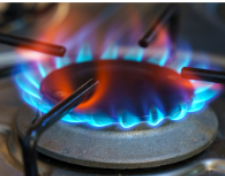
Researchers led by a team from Stanford University measured benzene emission rates from gas stoves in 87 homes, as well as running computer models of how benzene might spread. Their study, published in the Journal of Hazardous Materials, demonstrated that benzene-caused cancer risks are "significantly elevated" in homes with stoves that emit the most benzene and have the least ventilation—especially for children, whose lifetime risk rose 1.85 times higher than it did for adults. Read more
|
| |
| |
| |
|
To investigate the efficient operation of heat pumps, researchers from ETH Zurich spent two years gathering real-time data from 1,023 units in 10 European countries, including Germany, Austria, the Netherlands, Sweden, Denmark, France and the United Kingdom. When looked at in operation, it turns out that these units are often not optimally configured. Read more
|
|
| |
|
Billions of air conditioners worldwide use harmful refrigerants, ironically worsening the global warming they’re designed to alleviate. To tackle this issue, Barocal, a zero-carbon refrigeration spin-out of the University of Cambridge, is working on the development of “soft, waxy solid refrigerant.” Its unique properties may hold the key to a greener, more efficient way to cool. Read more
|
|
|
|
|
|
|
|
|
|
|
|
|
|
|
|
|
Interview with Andrew Pansulla
For nearly 100 years, chemists have been charged with addressing a growing list of factors when developing the “next new” refrigerant to serve market needs. These factors have ranged from performance and sustainability to safety, economic viability and more. This article explains some of the challenges of the global refrigerant transition as well as safety measures and adhering to ASHRAE standards as the market transitions to mildly flammable A2L refrigerants. Download here
|
|
|
ASHRAE is accepting abstract submissions for the 2026 Winter Conference to be held in Las Vegas, Nevada, January 31 – February 4, 2026, at Caesars Palace. Abstracts (400 words or less) are due May 28, 2025. Final conference papers are due September 3, 2025. Technical papers are also due May 28, 2025. All accepted papers will be considered for publication in Science and Technology for the Built Environment, ASHRAE’s research journal. For additional details on abstract submissions and updates on the 2026 ASHRAE Annual Conference, visit ashrae.org/2026Winter.
|
|
|
|
|
|
|
|
|
The White House’s 2026 budget proposal seeks to cut $19.3 billion from the Department of Energy’s (DOE) budget by making deep reductions to Infrastructure Investment and Jobs Act funding and the Office of Energy Efficiency and Renewable Energy. Compared to 2025 enacted funding levels, the budget proposal cuts around $15.2 billion of DOE’s IIJA funding, $2.6 billion from its Office of Energy Efficiency and Renewable Energy, $1.1 billion from its Office of Science, and $389 million from the Office of Environmental Management. Read more
|
|
Feedback
|
Ideas for future ASHRAE HVAC&R Industry News content are welcome. Email us.
|
|
|
|
|
|
|
|
|