As Winter Storm Fern swept across the United States in late January 2026, bringing ice, snow and freezing temperatures, it left more than a million people without power, mostly in the Southeast. Scrambling to meet higher than average demand, PJM, the nonprofit company that operates the grid serving much of the mid-Atlantic U.S., asked for federal permission to generate more power. Energy Secretary Chris Wright took another step, authorizing PJM, ERCOT and Duke Energy to tell data centers and other large power-consuming businesses to turn on their backup generators. Read more
|
|
|
|
|
|
|
|
|
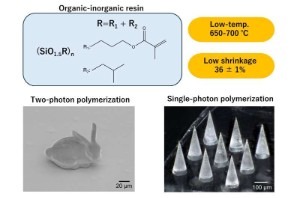
A research team from Yokohama National University has used advanced 3D printing techniques to develop low-temperature, "sinterless" silica glass. Their research, published in Polymers, converted 3D-printed objects into silica glass structures at significantly lower temperatures than traditional sintering, offering a promising route for efficient and precise glass manufacturing. Read more
|
|
|
|
|
|
|
|
A growing evidence base shows that chronic obstructive pulmonary disease (COPD) is affected by climate and environmental exposures, not only through extreme temperature exposure and air pollution but also through wildfire smoke and other potential natural disasters. Indoor and outdoor pollutants and climate extremes have shown association with COPD exacerbations separately, but these factors also can act synergistically to increase morbidity in patients with high-risk COPD. Read more
|
|
|
|
|
Elon Musk vowed this week to upend another industry just as he did with cars and rockets. The businessman wants to put as many as a million satellites into orbit to form vast, solar-powered data centers in space to allow expanded use of artificial intelligence and chatbots without triggering blackouts and sending utility bills soaring. To finance that effort, Musk combined SpaceX with his AI business, xAI, with plans for a initial public offering of the combined company. However scientists and industry experts say Musk faces formidable technical, financial and environmental obstacles. Read more
|
|
|
|
|
|
|
 |
|
Join host Justin Seter, along with guests David Quirk and Dustin Demetriou, live from the 2026 AHR Expo for all the latest on liquid cooling in data centers, including rapid IT advancements, the need for quality and speed in the evolving tech landscape, and industry-wide updates on best practices.
|
|
|
|
|
|
|
|
|
|
|
|
|
|
|
|
|
|
|
|
|
|
|
|
By Jim Butler and Ron Bernstein
As electrification and decarbonization efforts expand, the importance of securing building automation systems is essential for safeguarding security-sensitive buildings such as government facilities, hospitals and research laboratories and similar building types where the building “services” such as HVAC, lighting, fire/life safety rely on the control system. This column will focus on the cybersecurity aspects of network-based control system design and architecture. Download here
Access more ASHRAE Journal articles through the Technology Portal.
|
|
|
ASHRAE Concludes 2026 Winter Conference and AHR Expo with Strong Momentum for IEQ and Healthy Buildings
Held Feb. 2–4, the 2026 ASHRAE Winter Conference convened HVAC&R leaders, engineers, policymakers and researchers from around the world to examine the intersection of technology, sustainability, health and human experience in buildings. Attendees explored emerging trends including artificial intelligence, low-global-warming-potential refrigerants, energy storage, geothermal systems and occupant-centered design. Running concurrently, the AHR Expo transformed the Las Vegas Convention Center into a global showcase for HVAC&R innovation, with 1,945 exhibitors across 565,000 net square feet of exhibit space, welcoming an estimated 50,000 attendees over three days. Read more
|
|
|
|
|
|
|
New York is beginning to formalize something the building industry has largely treated as an afterthought. Under NYSDEC Part 494, owners and operators are now required to register certain HVAC and refrigeration equipment with the state, marking a significant expansion in how refrigerants are tracked, reported and regulated. While the rule has technically been on the books, recent escalation deadlines are pulling a much wider swath of commercial and multifamily buildings into compliance. Read more
|
|
Feedback
|
Ideas for future ASHRAE HVAC&R Industry News content are welcome. Email us.
|