|
|
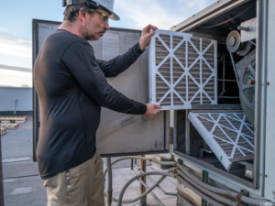
The Legionnaires’ disease outbreak last month in New York reminded people of the risk inadequately managed HVAC systems pose. Four people died and dozens were sickened by contamination that was spread through commercial building cooling towers, city health officials said. However, HVAC systems can pose risk more routinely than that if filters aren’t cleaned regularly, malfunctioning units release vapors from cleaning agents or if the systems cause indoor air to dry out too much, says Primrose Freestone, senior lecturer in clinical microbiology at the University of Leicester in the UK. Read more
|
| |
|
|
|
|
|
|
|
Lennox recently announced it has signed a definitive agreement to purchase the HVAC division of NSI Industries from Sentinel Capital Partners for approximately $550 million. This HVAC platform includes Duro Dyne, Supco and other leading critical component and accessories brands. Read more
|
|
|
Many companies might be happy with their data center water usage effectiveness (WUE) outcomes by beating the average, which is about 1.8 liters per kilowatt hour (L/kWh). Organizations with a special level of commitment to data center sustainability, however, might aim higher by targeting a WUE rate of 0 L/kWh – which is to say, they would run data centers that consume no water at all. The questions are: How realistic is it to operate a facility that consumes zero water, and what are the potential tradeoffs? Read more
|
|
|
|
|
|
|
A new report from the American Lung Association finds that replacing 33,500 conventional, combustion-based boilers nationwide with this electric alternative could avoid 77,200 premature deaths, 33 million asthma attacks and more than 200,000 new asthma cases by 2050. It would also save $1.1 trillion in health costs in that period, and prevent $351 billion in climate damages. Read more
|
|
|
 |
|
Join ASHRAE Journal Assistant Editor Allison Hambrick and guest Gursaran Mathur, Ph.D., P.E., Fellow/Life Member ASHRAE, as they discuss the circulation and management of carbon dioxide (CO2) in automotive vehicles and how high levels of CO2 concentrations which can impact the safety and health of vehicle occupants can be controlled.
|
|
|
|
|
|
|
|
|
|
|
|
|
|
|
|
|
|
|
|
|
|
|
|
By Hwakong Cheng, P.E.; Paul Raftery, Ph.D.; and Pat Wendler
Standard industry practice is to set back zone temperature setpoints when commercial buildings are unoccupied. HVAC systems then operate in warm-up mode to recover zone temperatures prior to the start of occupancy. These strategies, originally developed to reduce HVAC energy consumption, are due for re-examination with the movement toward electrification. Warming up a building as fast as possible may not be the best strategy in terms of energy use, operating cost or carbon emissions. This article discusses some downfalls of conventional morning warm-up practices, suggests an improved strategy and shows results from a pilot field demonstration test. Download here
|
|
|
ASHRAE and the United Nations Environment Programme (UNEP) OzonAction have released the Assessing RAC Plant Sustainability checklists and guidance sheets. These free, downloadable, easy-to-use tools are designed to help refrigerating and air-conditioning plants improve performance, reduce emissions and promote energy-efficient, sustainable operations. Read more
|
|
|
|
|
|
|
|
|
The HVAC equipment market is witnessing strong growth driven by rising urbanization, smart building trends and demand for energy-efficient climate control solutions. The global market size reached $231.9 billion in 2024, and it is projected to reach $356.9 billion by 2033, exhibiting a growth rate of 4.66% during 2025-2033. Read more
|
|
Feedback
|
Ideas for future ASHRAE HVAC&R Industry News content are welcome. Email us.
|