| If you have trouble viewing this email, click here to view it in your browser. |
|
|
|
 |
|
Shaping Tomorrow's Built Environment Today
|
|
|
|
In the suburbs of northeast Paris, there is a giant terra-cotta-colored warehouse with a labyrinth of windowless corridors inside. This summer, a deafening whir emanated from behind rows and rows of anonymous gray doors and under white striplights, disposable earbuds were available to protect passersby from the noise. These were the uncanny innards of one of France’s newest data centers, completed earlier this year, which was being used to heat the new Olympic Aquatics Center—visible from the data center’s roof. Read more
|
|
|
|
|
|
|
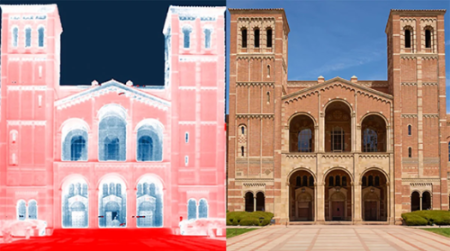
A team of researchers from the University of California, Los Angeles (UCLA) and their collaborators have developed a cost-effective and scalable method to cool buildings during the summer and heat them in the winter. Their study, recently published in Cell Reports Physical Science, details a new method to manipulate the movement of radiant heat through common building materials to optimize thermal management. Read more
|
|
|
|
Geothermal systems could go a long way in helping decarbonize buildings, which are responsible for about a third of total greenhouse gas emissions in the U.S. With these systems, buildings can draw heat from water pumped from below their foundations, instead of burning natural gas piped in from afar. Utilities use the same equipment to deploy networked geothermal as they do for gas lines, and even the same kind of pipes – they are just circulating fluid instead of gas. Read more
|
|
|
|
Did you know milk dust and flour, among other dusts, are explosive? Combustible dusts require the use of dust collectors. Chris Jester discusses the design of these systems, including air velocity and duct sizing, safety considerations, motor requirements and relevant codes. This HVAC Fundamentals column appears in the August 2024 issue of ASHRAE Journal.
|
|
|
|
|
|
|
|
|
|
|
|
|
|
|
|
|
|
|
|
By Reid Hart, P.E., Life Member ASHRAE; Doug Maddox, P.E., Member ASHRAE; Michael Tillou, P.E., Member ASHRAE; Michael Rosenberg, Fellow ASHRAE
ASHRAE/IES Standard 90.1-2022 includes a new prescriptive efficiency requirement called energy credits. This article puts energy credits in the context of energy savings progress for Standard 90.1 and discusses their history, scope and applicability to different building types and situations. Download here
|
|
|
Abstract submissions for the REHVA HVAC World Congress CLIMA taking place June 4-6, 2025 in Milan, Italy, have been extended until August 31, 2024. The REHVA HVAC World Congress CLIMA is the leading international scientific congress in the field of HVAC and topics include new HVAC components and systems, HVAC impact on comfort and health of occupants and operatores, environmental impact of new technologies, smart buildings and more. Please visit the CLIMA website for more information on the conference.
|
|
|
|
|
|
|
|
|
Two cold regions in the U.S. are getting a massive infusion of funds to swap fossil-fueled furnaces, boilers and water heaters for heat pumps. The initiatives—one based in New England, the other in Alaska—were among the 25 projects selected by the U.S. Environmental Protection Agency for a share of $4.3 billion in Climate Pollution Reduction Grants. Read more
|
|
Feedback
|
Ideas for future ASHRAE HVAC&R Industry News content are welcome. Email us.
|
|
|
|
|
|
|
|
|